Common Problems Companies Face During ISO 9001 Implementation in a Quality Management System

ML GLOBTECH
May 15, 2026
Implementing a strong Quality Management System is one of the most important steps organizations take to improve operational consistency, customer satisfaction, and compliance standards. However, despite the long-term benefits of ISO 9001 certification, many companies struggle during implementation due to process gaps, documentation issues, poor communication, and lack of internal alignment.
From manufacturing industries to healthcare providers and IT companies, businesses often face similar operational challenges while building an ISO-compliant system. In many cases, the problem is not the standard itself, but the lack of structure, process visibility, and document control.
Organizations using a well-organized ISO Quality Management Software framework generally experience smoother implementation because they can manage workflows, approvals, audits, and records more efficiently across departments.
Why ISO 9001 Implementation Becomes Challenging
ISO 9001 requires organizations to establish standardized processes, monitor performance, maintain documented procedures, and continuously improve quality operations.
Many companies underestimate the practical effort involved in:
Document control
Employee training
Process standardization
Internal audits
Risk management
KPI tracking
Compliance reporting
Without a clear implementation strategy, businesses often experience delays, confusion, and audit failures.
Documentation Overload Creates Operational Confusion
Documentation management is one of the most common pain points during ISO 9001 implementation.
Organizations are required to maintain large volumes of records, including:
Standard operating procedures (SOPs)
Quality manuals
Inspection reports
Corrective action records
Vendor assessments
Employee training documents
Audit findings
Risk analysis reports
When documents are stored in emails, spreadsheets, local folders, or paper files, teams struggle to maintain consistency and accessibility.
Common Documentation Problems
Businesses frequently encounter:
Duplicate documents
Missing revisions
Unapproved procedures
Outdated forms
Lost audit records
Unauthorized document access
These issues become major risks during external audits and compliance reviews.
How Structured Document Control Improves Compliance
An organized QMS Documents Management Software system helps companies centralize documentation and maintain process accuracy.
Benefits include:
Controlled document revisions
Centralized record storage
Easy retrieval during audits
Standardized templates
Improved approval tracking
Better department collaboration
Companies implementing an Advanced Quality Management System often reduce documentation-related errors significantly because records remain structured and accessible.
Process Confusion Between Departments
Another major challenge during ISO implementation is inconsistent process execution across departments.
Different teams may follow separate workflows for similar tasks. For example:
Procurement may use informal approvals
Operations may skip reporting steps
HR may maintain outdated training records
Quality teams may use separate compliance formats
This lack of standardization creates operational confusion and weakens compliance consistency.
Signs of Poor Process Alignment
Organizations commonly notice:
Employees relying on verbal instructions
Multiple templates for the same activity
Undefined process ownership
Inconsistent approval procedures
Delayed corrective actions
Without clearly documented workflows, maintaining ISO standards becomes difficult.
Best Practices to Reduce Process Confusion
Businesses can improve process consistency by:
Defining process responsibilities clearly
Creating workflow maps for each department
Standardizing forms and templates
Conducting cross-functional training
Reviewing procedures regularly
Using the Best Quality Management Software System can help organizations maintain uniform process control across teams and locations.
Employee Resistance Slows ISO Adoption
Employee resistance is one of the most overlooked barriers during ISO 9001 implementation.
Many employees initially view ISO procedures as:
Extra paperwork
Increased monitoring
Additional responsibilities
Time-consuming compliance tasks
Without proper communication, staff members may resist adopting new procedures.
Why Employees Resist Quality Processes
Resistance often happens because employees:
Do not understand the purpose of ISO standards
Receive limited practical training
Fear accountability changes
Feel disconnected from management decisions
When employees are excluded from implementation planning, compliance participation decreases.
How Organizations Can Improve Employee Engagement
Successful companies focus heavily on awareness and training.
Effective approaches include:
Conducting department-specific workshops
Explaining process benefits clearly
Involving employees in SOP creation
Simplifying reporting procedures
Encouraging feedback during implementation
When employees understand how quality systems improve operational clarity, adoption becomes easier.
KPI Tracking Failures Reduce Quality Visibility
ISO 9001 requires organizations to monitor measurable quality objectives. However, many companies struggle to establish meaningful KPIs.
Common KPI tracking mistakes include:
Measuring irrelevant metrics
Using inconsistent data sources
Lack of reporting ownership
Delayed performance reviews
Poor corrective action follow-up
As a result, management loses visibility into operational performance and compliance gaps.
Examples of Weak KPI Management
A manufacturing company may focus only on production speed while ignoring product defects.
A logistics company may measure delivery volume but fail to track customer complaints.
These gaps weaken the effectiveness of the overall quality system.
Recommended KPI Monitoring Practices
Organizations should focus on measurable indicators such as:
Customer complaint trends
Audit non-conformities
Supplier quality performance
Rework percentages
Corrective action closure rates
On-time delivery performance
An effective ISO Quality Management Software platform helps businesses organize operational data and improve performance tracking accuracy.
Department Conflicts During ISO Implementation
Department-level conflicts frequently slow ISO implementation projects.
Different teams often have conflicting priorities:
Operations prioritize speed
Quality teams prioritize compliance
Finance focuses on cost reduction
Management expects faster certification timelines
Without coordination, implementation becomes fragmented.
Common Causes of Department Misalignment
Typical reasons include:
Poor communication
Undefined responsibilities
Lack of executive involvement
Separate reporting systems
Resistance to workflow changes
When departments operate independently, process gaps increase.
How Businesses Can Improve Coordination
Organizations should:
Assign a dedicated ISO implementation leader
Conduct regular cross-functional meetings
Define shared quality objectives
Maintain transparent reporting systems
Review implementation progress monthly
Companies using centralized Quality Audit Management Software often improve collaboration because audit findings, corrective actions, and approvals remain visible across departments.
Audit Panic Before Certification Assessments
Many businesses delay compliance preparation until external audits approach. This creates unnecessary pressure and operational stress.
Common Audit Preparation Problems
Companies often face:
Missing records
Incomplete training documentation
Unresolved non-conformities
Expired SOP approvals
Poor corrective action tracking
Employees then spend days locating files and updating records before audits.
This “audit panic” increases the risk of certification delays.
How to Stay Audit-Ready Throughout the Year
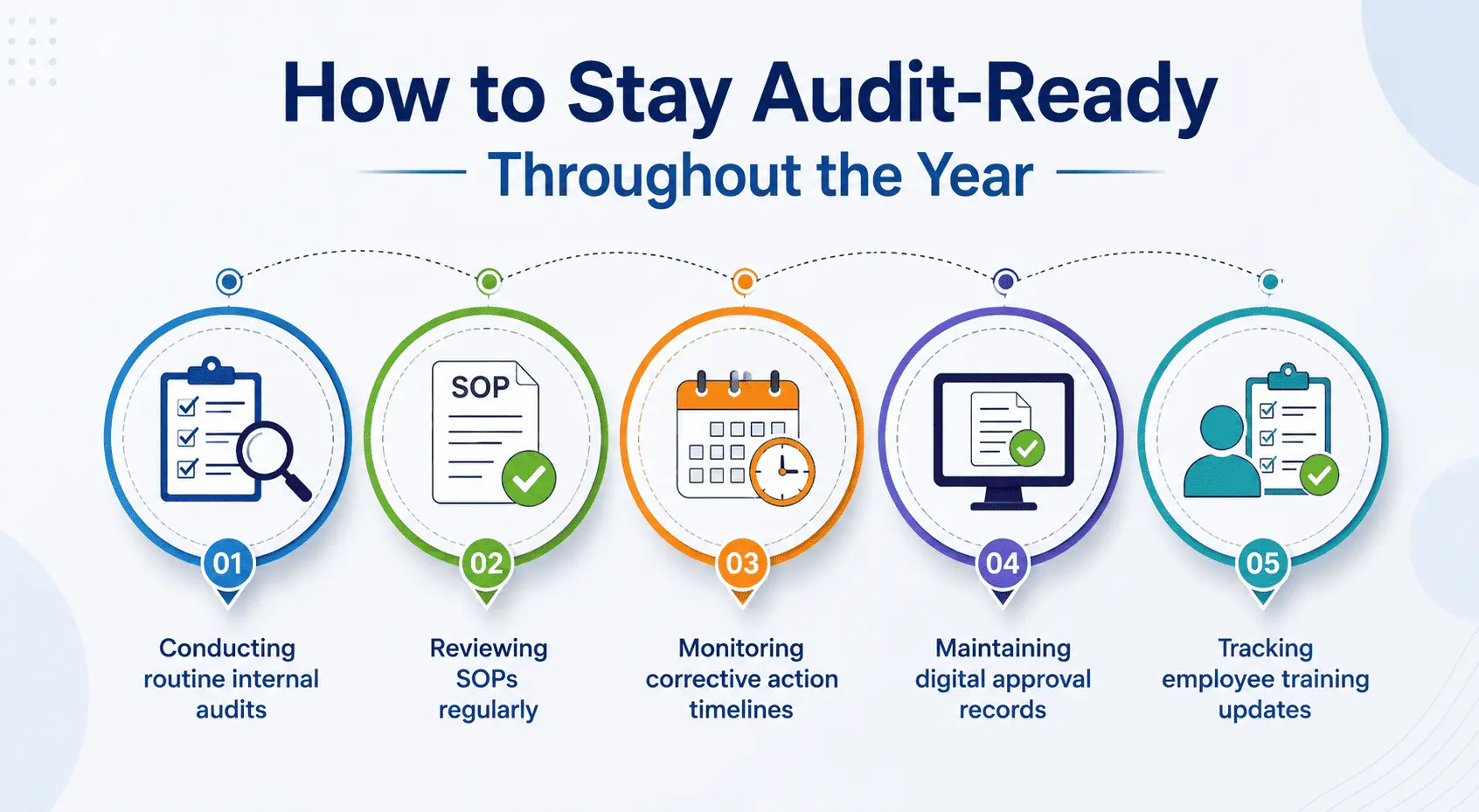
Organizations should maintain continuous compliance practices rather than preparing only before audits.
Recommended strategies include:
Conducting routine internal audits
Reviewing SOPs regularly
Monitoring corrective action timelines
Maintaining digital approval records
Tracking employee training updates
An Advanced Quality Management System can help businesses improve audit readiness by centralizing records and maintaining process traceability.
Lack of Leadership Involvement Weakens Implementation
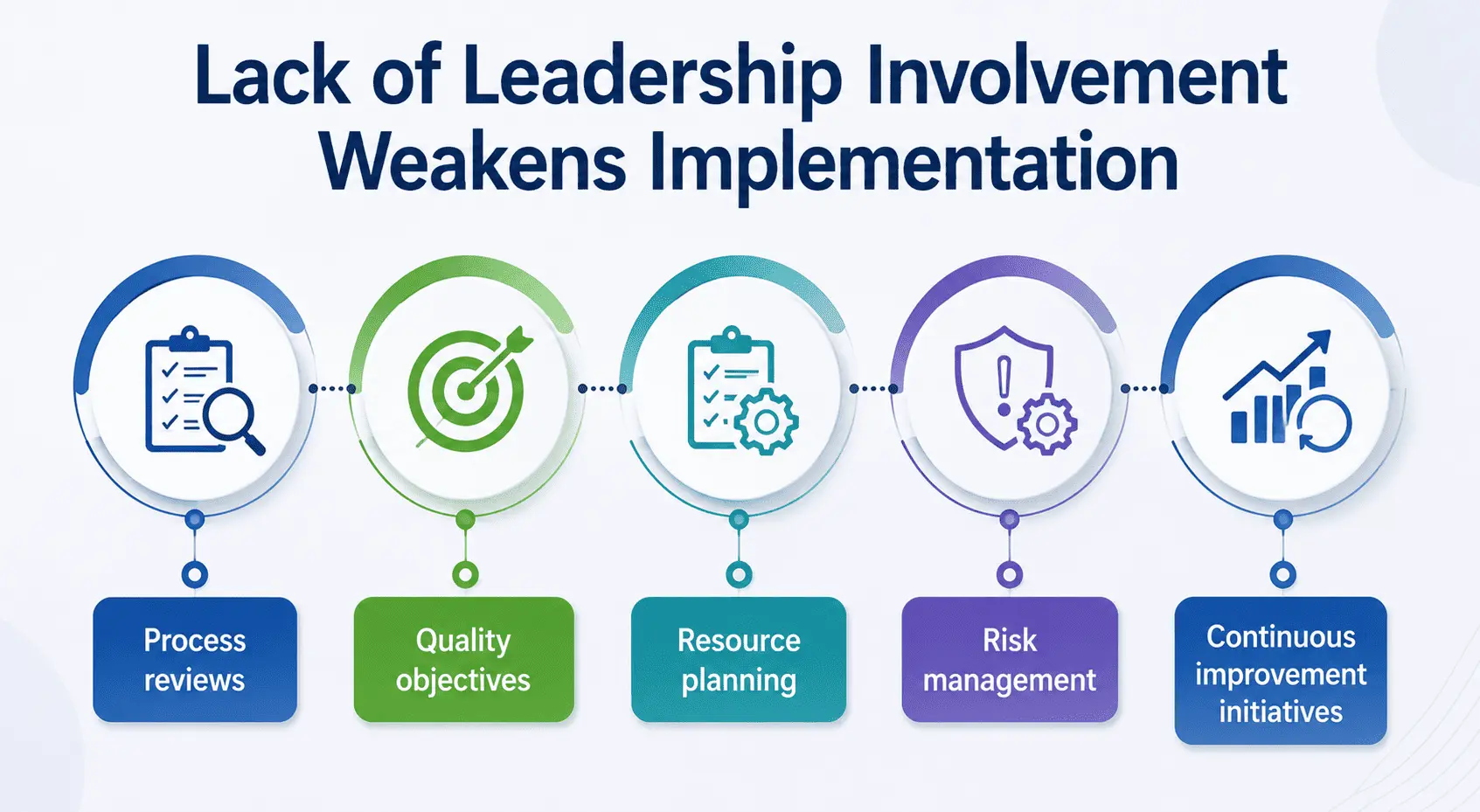
ISO 9001 implementation becomes difficult when leadership involvement is limited.
Some organizations delegate the entire process to quality teams without management participation.
However, ISO standards require leadership engagement in:
Process reviews
Quality objectives
Resource planning
Risk management
Continuous improvement initiatives
Without leadership support, implementation loses direction and accountability.
Poor Change Management During ISO Transition
Introducing new quality procedures changes how employees work daily.
Many organizations fail because they implement too many process changes simultaneously without proper planning.
Common Change Management Mistakes
Lack of employee communication
No phased rollout strategy
Limited hands-on training
Inconsistent process enforcement
Unrealistic implementation timelines
Businesses should introduce process changes gradually while monitoring adoption progress regularly.
The Importance of Digital Quality Systems
Modern ISO implementation increasingly depends on digital systems for process control and compliance management.
Companies relying heavily on manual records often experience:
Document duplication
Delayed approvals
Limited reporting visibility
Inefficient audit preparation
Poor version control
A centralized Quality Management System helps organizations maintain operational consistency and documentation accuracy.
Businesses looking to improve compliance workflows often explore structured digital solutions from providers such as ML GLOBTECH to strengthen document control and quality operations.
Conclusion
ISO 9001 implementation challenges are common across industries, but most problems can be reduced through better planning, structured workflows, employee involvement, and strong document control.
Organizations frequently struggle with:
Documentation overload
Process confusion
Employee resistance
KPI tracking failures
Department conflicts
Audit preparation stress
A properly managed ISO Quality Management Software framework can help companies maintain compliance, improve operational visibility, and simplify quality management processes over the long term.
Frequently Asked Questions
What is the biggest problem companies face during ISO 9001 implementation?
The biggest challenge is usually maintaining process consistency and proper documentation control across departments. Many organizations struggle with employee adoption, audit preparation, and workflow standardization.
Why is document control important in a Quality Management System?
Document control ensures employees use the latest approved procedures and records. It helps businesses maintain compliance, improve audit readiness, and reduce operational confusion.
How can companies reduce audit stress during ISO certification?
Businesses can reduce audit pressure by conducting regular internal audits, maintaining updated records, tracking corrective actions, and using centralized quality management systems.
What causes employee resistance during ISO implementation?
Employees often resist ISO procedures because they see them as additional workload or unnecessary documentation. Limited training and poor communication also contribute to resistance.
How does Quality Audit Management Software help organizations?
Quality Audit Management Software helps businesses organize audit schedules, track findings, manage corrective actions, and maintain compliance records more efficiently.
Why do departments conflict during ISO implementation?
Departments often have different operational priorities and reporting systems. Without proper coordination and leadership involvement, process alignment becomes difficult.