A Complete Guide to Quality Management System (QMS) in 2026

ML GLOBTECH
Mar 31, 2026
In today’s competitive and compliance-driven environment, a Quality Management System is no longer optional—it’s essential for businesses that aim to deliver consistent quality and maintain customer trust. Whether you’re in manufacturing, healthcare, IT, or pharmaceuticals, implementing an effective QMS can significantly improve operational performance and product reliability.
This guide explains everything you need to know about a Quality Management System (QMS) in 2026, including its importance, components, benefits, and how modern systems are evolving.
What is a Quality Management System (QMS)?
A Quality Management System is a structured framework of processes, procedures, and policies designed to ensure that products or services consistently meet customer expectations and regulatory standards.
Instead of focusing only on final inspection, QMS emphasizes process improvement, error prevention, and continuous monitoring across the entire organization.
Why Quality Management System is Important in 2026
As industries become more regulated and customer expectations continue to rise, businesses must maintain higher quality standards than ever before. A well-implemented QMS helps organizations:
Maintain consistent product or service quality
Improve customer satisfaction and retention
Ensure compliance with industry standards
Reduce operational errors and costs
Strengthen brand reputation
Modern businesses are increasingly adopting Advanced Quality Management System solutions to manage complex workflows and compliance requirements more effectively.
Key Components of a Quality Management System
A strong QMS is built on several core elements that work together to ensure efficiency and quality.
1. Quality Policy and Objectives
Defines the organization’s commitment to quality and sets measurable goals aligned with business strategy.
2. Process Management
Standardized processes ensure consistency across operations and reduce variability in output.
3. Document Control System
Using QMS Documents Management Software, businesses can manage SOPs, manuals, and compliance documents in a centralized system.
4. Quality Assurance and Control
Quality Assurance (QA): Prevents defects by improving processes
Quality Control (QC): Identifies defects in final outputs
5. Internal Audits and Compliance
Tools like Quality Audit Management Software help organizations conduct regular audits and ensure adherence to standards.
6. Continuous Improvement
Frameworks like PDCA (Plan-Do-Check-Act) enable ongoing process improvement and performance optimization.
Types of Quality Management Systems
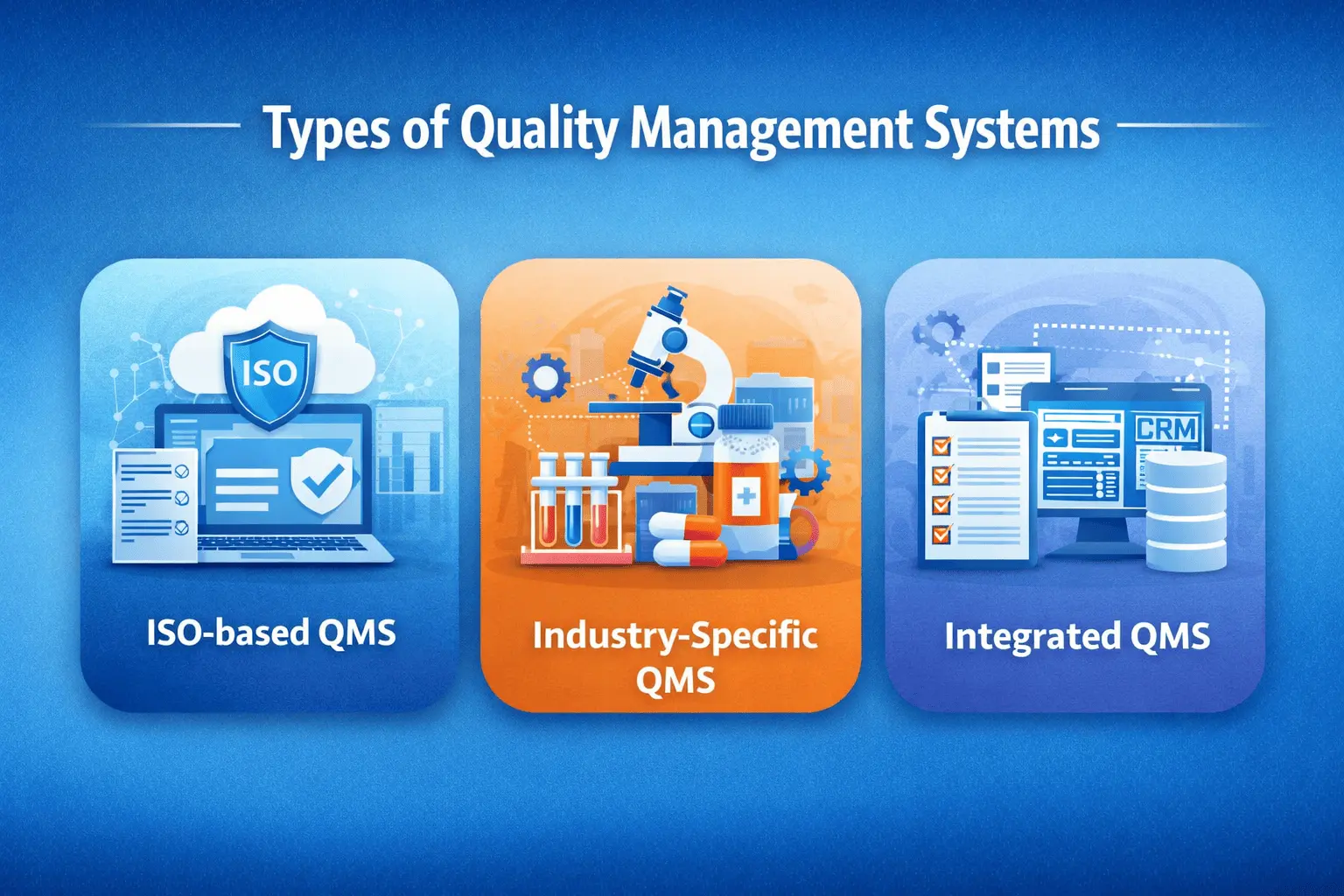
Different industries require different types of QMS frameworks:
ISO-based QMS – Follows international standards using ISO Quality Management Software
Industry-specific QMS – Tailored for sectors like pharmaceuticals, healthcare, and manufacturing
Integrated QMS – Combines quality with other systems like CRM and ERP
For example, pharmaceutical companies often rely on Top QMS Software for Pharmaceutical Industry to maintain strict compliance and traceability.
Benefits of Implementing a Quality Management System
1. Improved Operational Efficiency
Standardized workflows reduce duplication, minimize errors, and increase productivity.
2. Better Decision-Making
Real-time data and reporting help management make informed decisions.
3. Enhanced Customer Satisfaction
Consistent quality leads to better customer experiences and long-term loyalty.
4. Regulatory Compliance
QMS ensures businesses meet industry regulations, avoiding penalties and legal risks.
5. Cost Reduction
Minimizing defects and rework significantly reduces operational costs.
Best Practices for Implementing QMS in 2026
To successfully implement a QMS, businesses should follow these proven strategies:
✔ Define Clear Objectives
Align quality goals with business objectives to ensure measurable outcomes.
✔ Choose the Right Software
Select the Best Quality Management Software System based on your industry and operational needs.
✔ Train Employees Effectively
Ensure staff understands processes, standards, and their role in maintaining quality.
✔ Focus on Documentation
Maintain accurate records using reliable QMS Documents Management Software.
✔ Conduct Regular Audits
Use audit tools to identify gaps and improve processes continuously.
✔ Monitor Performance Metrics
Track KPIs such as defect rates, customer complaints, and process efficiency.
Latest Trends in Quality Management System (QMS)
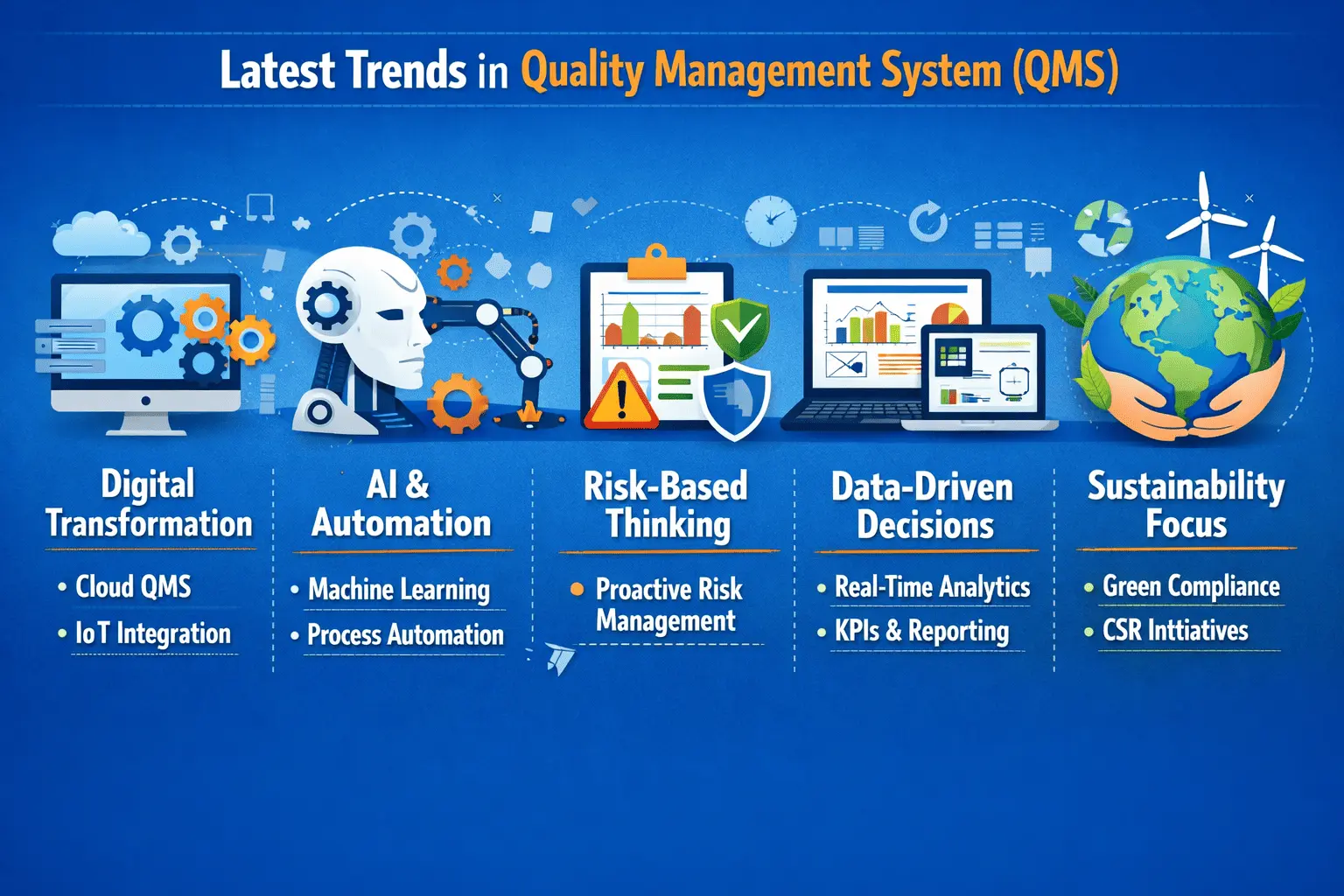
1. Digital Transformation of QMS
Organizations are shifting from manual systems to digital platforms for better efficiency and accuracy.
2. Integration with Business Systems
Modern QMS integrates seamlessly with ERP, CRM, and inventory systems.
3. Industry-Specific Solutions
Customized solutions like Top QMS Software for Pharmaceutical Industry are becoming more popular.
4. Real-Time Monitoring and Reporting
Businesses can now track quality metrics instantly and make quick decisions.
5. Focus on Risk-Based Thinking
Identifying and mitigating risks has become a key part of QMS strategies.
Choosing the Best Quality Management Software
Selecting the right QMS software is critical for long-term success. Here are some key factors to consider:
Ease of use and user interface
Customization options
Integration capabilities
Compliance support
Reporting and analytics features
A reliable ISO Quality Management Software solution ensures your business meets global standards while improving efficiency.
At ML GlobTech, businesses often explore tailored QMS solutions that align with their operational needs and industry requirements.
Real-World Example of QMS Implementation
A mid-sized manufacturing company faced frequent product defects and customer complaints. By implementing an Advanced Quality Management System, they:
Standardized production processes
Introduced automated document control
Conducted regular internal audits
Within six months, they achieved:
35% reduction in defects
Improved customer satisfaction
Faster compliance approvals
This highlights how a well-implemented QMS can drive measurable business improvements.
Common Challenges in QMS Implementation
While QMS offers numerous benefits, businesses may face challenges such as:
Resistance to change from employees
Lack of proper training
Poor documentation practices
Choosing the wrong software
Inconsistent monitoring
These challenges can be overcome with proper planning, training, and the right tools.
Future of Quality Management System
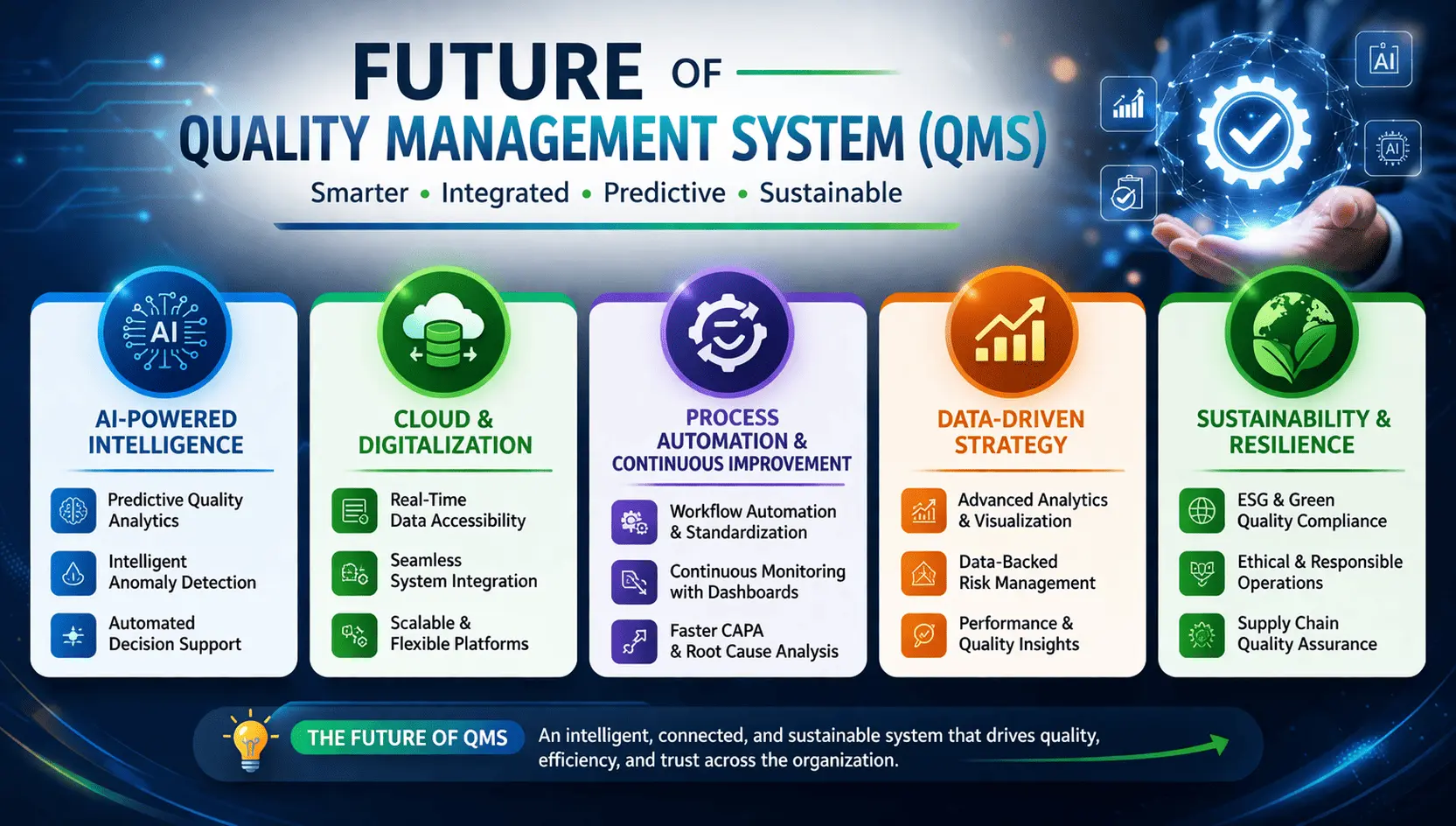
The future of QMS lies in smarter, more integrated systems that provide deeper insights and better control over processes. Businesses are moving toward:
More advanced analytics and reporting
Industry-specific customization
Stronger compliance frameworks
Scalable and flexible systems
Organizations that adopt modern QMS practices will be better positioned for long-term success.
FAQs on Quality Management System (QMS)
1. What is the main purpose of a Quality Management System?
The main purpose of a QMS is to ensure consistent quality in products or services by standardizing processes, reducing errors, and improving efficiency across the organization.
2. What industries use Quality Management Systems?
QMS is used in various industries including manufacturing, healthcare, pharmaceuticals, IT, construction, and logistics, where maintaining quality and compliance is critical.
3. What is ISO in Quality Management System?
ISO refers to international standards that define requirements for quality management. ISO-based QMS helps businesses maintain global quality benchmarks and improve credibility.
4. How does QMS improve customer satisfaction?
By ensuring consistent quality, reducing defects, and improving service delivery, QMS helps businesses meet customer expectations and build trust.
5. What are the key features of good QMS software?
Good QMS software includes document management, audit tracking, compliance monitoring, reporting tools, and integration capabilities for better efficiency.
6. Is QMS suitable for small businesses?
Yes, QMS can be scaled according to business size. Even small businesses can benefit from improved processes, reduced errors, and better customer satisfaction.
Conclusion
A Quality Management System is a powerful framework that helps businesses maintain consistency, improve efficiency, and achieve customer satisfaction. In 2026, adopting a modern and structured QMS approach is essential for staying competitive in any industry.
By implementing the right strategies and tools—such as Quality Audit Management Software, QMS Documents Management Software, and ISO Quality Management Software—businesses can ensure sustainable growth and operational excellence.
Companies like MLGLOBTECH understand the importance of aligning quality systems with business goals, making QMS an integral part of long-term success.